












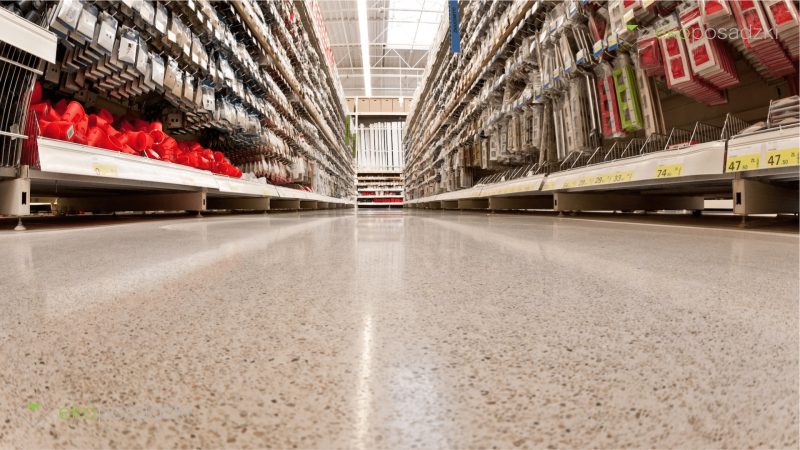
At first you probably don't need it. Or at least it seems that way.
Because nothing happens to it for a while. The concrete looks fresh, there is no dust, no cracks or cavities. But sooner or later -. there are always problems.
And not a minor one. If the concrete is not properly protected, the process of its degradation begins, which over time will cost you much more, than the expense of securing it already at the construction stage.
Dusting - the beginning of the end
Unprotected concrete will always start to dust - is a natural process resulting from its microporous structure. At first it's barely visible dirt and residue. But then...
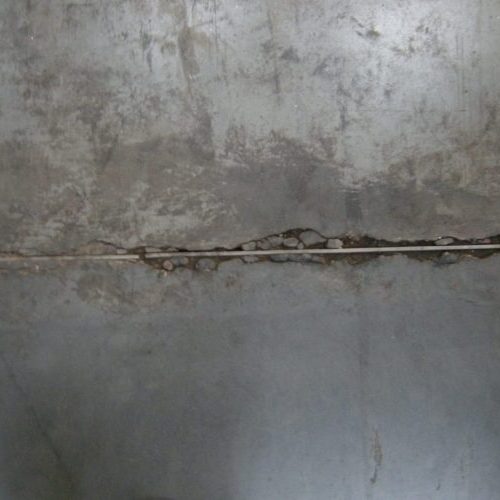
Concrete, despite its strength, has a porous structure that, without proper chemical curing, is vulnerable:
Don't. Surface hardening alone (e.g., with DST sprinkles) does not provide full protection for concrete in the long term. And if it is not supplemented with chemical curing, the floor will sooner or later begin to dust and degrade.
In Poland, instead of silicates, a popular quick fix treatment is often used after the concrete has been smeared: spraying of acrylic resin, commonly referred to by contractors "stinker" - Because of its intense, irritating odor.
It forms a thin, transparent protective coating that:
- early actually stops dusting,
- gives fresh concrete light shine and aesthetic appearance,
- plus. in the resin layer rubber from forklift wheels blends in, co:
- Creates dark, ugly footprints,
- spoils the aesthetics of the floor,
- is difficult or even impossible to clean, even by specialized means.
- But after a few weeks or months wear out under the influence of traffic and operation,
- and then all that's left is "raw" concrete, which:
- begins to dust,
- absorbs water, oils, dirt,
- Destroys quickly mechanically - scratches, cavities and chips are formed,
This solution is temporary, not cheap at all but popular, but From the point of view of durability and maintenance of the floor - very risky.
On the surface, it has an effect, but doesn't solve the problem - it only delays it. In practice, this means the need for frequent cleaning, repair or refinishing of the floor after just a dozen months.
The most cost-effective and efficient solution, both in terms of durability, aesthetics and maintenance costs - the is to choose the right way to cure the floor according to the type of reinforcement and its purpose.
If you want to find out, what chemical hardeners, impregnating and protecting agents best use - taking into account the type of object, intensity of use and typical soiling -
Download our free guide and choose a solution to fit your floor.
At first, it may not seem like it. The floor looks good, nothing is happening. But that's just an appearance - Any unprotected concrete floor sooner or later begins to dust, absorb dirt and degrade. Dusting, tire marks, penetrating chemicals, scratches or slipperiness - these are real problems that appear faster than you expect.
Floor protection is not a luxury, it's a necessity. And it works best when it's planned from the beginning - with adjustments to the structure, reinforcement and use.
If you want to avoid costly repairs and have peace of mind for years -. Secure the floor wisely before problems arise.