
Help
FAQ
Ready-made questions and answers, no sign-in needed. Filter by floor problem or by Crete Colors product.
Find a solution to your concrete problem or learn more about our products.
- Can the appearance of a polished floor with many visible repairs be improved?Show answer
Repaired areas can remain visible even after grinding and polishing. If their appearance spoils the look of the facility, you can consider staining the concrete, for example with C² Tint. It is not paint and will not completely hide the differences, but a suitably chosen colour or pattern can help achieve a more consistent effect. Before making a decision, it is worth carrying out a trial on a section of the floor.
Products in the shop
- Can polished concrete be washed with diamond pads?Show answer
Opinions are divided, because everything depends on the type of pad, the floor and how often it is washed. A diamond pad does not only clean, it can also gradually grind the surface. Aggressive pads used regularly can wear away the surface-hardened layer. On terrazzo tiles, grooves several millimetres deep have even appeared in places where racking stood for years.
If you decide to use diamond pads, choose gentler ones with a grit above #1500, and preferably higher still. Their abrasive action is then lower. It is always worth checking the effect on a small area first. Diamond pads should not be used on floors protected with a coating, because they may remove it.
It is also important to remember that a diamond system requires regular use to maintain the desired effect. The pads themselves are more expensive than ordinary washing pads, and unprotected concrete remains susceptible to stains and dirt.
In many facilities a more practical solution is to protect the concrete against stains beforehand, then wash regularly with a gentle pad and periodically carry out maintenance washing with C² Maintenance, which contains a lithium silicate conditioner. Such a system reduces the risk of wearing the surface, makes daily care easier and is usually less costly to maintain.
Products in the shop
- Should polished concrete be washed with brushes or pads?Show answer
For daily washing of polished concrete it is best to use soft pads, most often white or red. A blue pad can be used periodically if the level of soiling requires it and the condition of the floor allows it. Aggressive pads, such as green, brown and black, can dull the finish over time and wear the surface, so they are not recommended.
We also do not recommend brushes, especially hard ones. Their bristles can gradually abrade the surface and pull material out of micropores and small recesses. The floor then becomes rougher, harder to clean and more prone to collecting dirt.
- How does hardening concrete with lithium silicate differ from sodium silicate?Show answer
Both technologies harden concrete, but C² lithium silicates work faster, penetrate the concrete structure effectively and reduce the risk of white deposits.
The main differences according to the Crete Colors comparison:
Greater abrasion resistance: in tests presented by the manufacturer, lithium silicate achieved an improvement of over 60%, while sodium and potassium products achieved about 30%.
Faster effect: the manufacturer states that lithium hardening develops its properties within 7-14 days, whereas traditional sodium products may need significantly longer.
Deeper penetration: lithium technology makes it easier for the product to penetrate the concrete structure and densify it evenly.
Fewer application problems: a lower risk of white efflorescence and deposits, and less need for additional washing of the surface.
Why does it work? Lithium silicate reacts with the calcium hydroxide present in concrete, forming additional C-S-H compounds that densify and strengthen its structure. The result is greater abrasion resistance and effective reduction of dusting.
Which lithium hardeners does Decokoncept offer?
C² ECO HARD: for economical hardening and dust reduction of concrete.
C² Hard Blend: for densifying and improving the properties of concrete surfaces.
C² Hard: our most popular lithium silicate based hardener, for new and existing floors.
C² Super Hard: a premium product for particularly demanding surfaces, including weak, porous and heavily dusting concrete.
What do you gain? A more durable floor, less dusting, greater abrasion resistance and lower maintenance costs.
Contact Decokoncept. We will choose the right hardener for the quality of your concrete, so you do not overpay for a product you do not need.
Products in the shop
- Why does a concrete floor dust despite regular washing?Show answer
Washing removes dust, but if the top layer of concrete is being worn away under trolley and forklift wheels, the dust will keep coming back. Rub a washed and dried area with a clean, dry cloth. Fine powder on the cloth may indicate that the concrete is dusting, especially if dust regularly returns along trolley routes. Depending on the condition of the floor, you can consider chemical hardening or, where wear is greater, renovation by grinding, hardening and polishing.
- How does Ultra Slab 1 help when laying a new concrete floor?Show answer
Ultra Slab 1 is a product that supports the placing and troweling of fresh concrete and is used in two stages.
The first application, immediately after the concrete is placed, reduces water evaporation caused by sun, drafts and high temperature. It helps retain the moisture needed for proper cement setting, supports the setting process and reduces the risk of premature drying of the surface.
The second application, before power troweling with pans begins, makes the concrete easier to work without the need to add water, which could weaken the top layer. It enables safer use of DST hardening toppings and helps achieve a more even floor colour.
After troweling is finished, we recommend applying Ultra Slab C, which cures the fresh concrete and provides its initial chemical hardening.
Benefits for the contractor: easier troweling, a reduced risk of drying out and weakening the surface, safer execution of DST floors and a more uniform appearance of the finished concrete.
Products in the shop
- How can dusting, crumbling, previously poured or poorly cured concrete be strengthened?Show answer
Dusting and weakened concrete can be effectively strengthened! For this we recommend two products: C² Hard and the even stronger C² Super Hard, designed for more demanding surfaces.
The products penetrate the concrete structure, harden it, increase abrasion resistance and reduce dusting.
One day is enough for application, and the first strengthening effects are visible as early as the next day!
It is a way to improve the durability of an existing floor without having to replace it, provided the substrate is suitable for repair.
Products in the shop
- Can concrete dusting be reduced without grinding?Show answer
Yes, if the surface is sound, clean and absorbent. You can then carry out a trial with a silicate hardener. If the top layer flakes, crumbles or feels like pumice, the weak layer must first be removed, then hardened and polished.
- How do I order products in the B2B shop?Show answer
Create a B2B account on the website, wait for approval by Decokoncept, sign in and add products to the cart. Net prices are visible after signing in.
- What material can C² Salt Safe™ be applied to?Show answer
C² Salt Safe™ is applied to "open concrete"
- concrete that has not been chemically hardened or sealed,
- it cannot be applied over any other product.
- C² Salt Safe™ is the last step and repels any liquids that end up on the surface.
Products in the shop
- Does Decokoncept advise on system selection?Show answer
Yes. Write through the Contact form or call us, and we will match Crete Colors technology to the facility, the traffic and the desired result.
- Can water be added to the concrete surface during troweling?Show answer
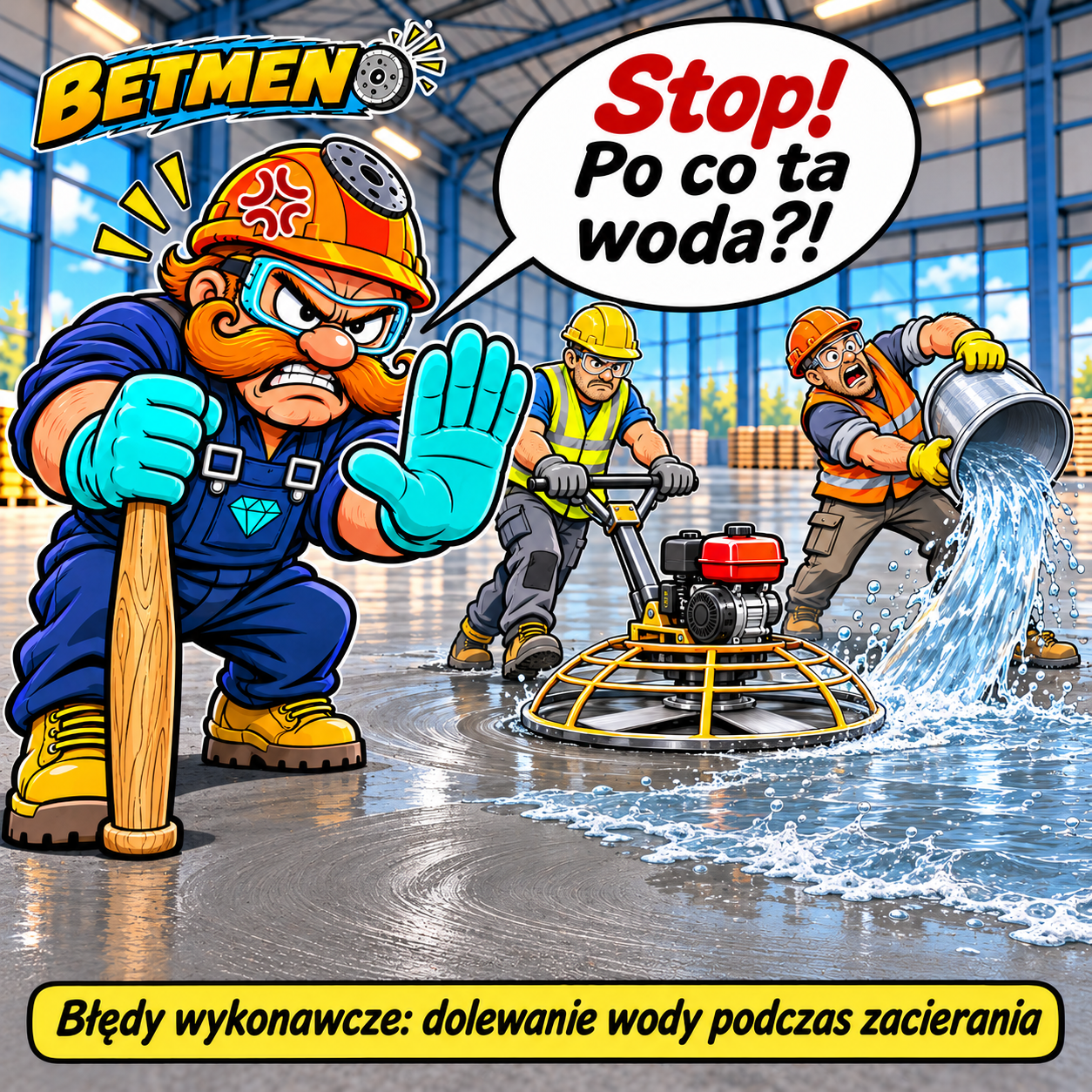
Water should not be added to the concrete surface during troweling! Although in emergency situations contractors sometimes resort to it, it can seriously weaken the top layer of the concrete, especially when DST hardening toppings are used. The consequences can be micro-cracks, so-called crazing, reduced abrasion resistance and even delamination of the surface hardening.
The solution is Ultra Slab 1. The product reduces overly fast water evaporation, protects the surface from the effects of sun and drafts, and helps retain the right amount of cement paste, which contractors call "butter".
As a result, the concrete is easier to trowel, the DST topping spreads better, and the contractor can avoid the risky addition of water.
Ultra Slab 1 eliminates one of the most common causes of problems during troweling, making it easier to produce a durable and even concrete floor.
Products in the shop
- Will painting the floor solve the dusting problem?Show answer
Paint can reduce dusting, but on greasy or brittle concrete it may quickly peel. Even with good adhesion, ordinary floor paint can wear through under forklift and trolley wheels. That is why we advise against it in halls and warehouses with heavy traffic. It may work on a well-prepared substrate in a basement or private garage.
In halls and warehouses, a good solution is chemical hardening with a product matched to the condition of the concrete. If the floor is badly damaged, the weakened layer must be removed before hardening, for example by grinding, and defects repaired if necessary.
- Is Ultra Slab 1 suitable for mechanically troweled floors?Show answer
Yes! Ultra Slab 1 is particularly recommended for industrial floors that are mechanically troweled, both with DST surface hardening and without topping.
The product is applied twice while the floor is being made:
First application: immediately after the concrete is placed. Ultra Slab 1 reduces overly fast water evaporation caused by sun, drafts, wind and high temperature. It helps retain the moisture needed for proper cement hydration and reduces the risk of premature drying of the surface.
Second application: before power troweling with pans begins. The product improves conditions for mechanical finishing, helping to keep the right amount of cement paste on the surface, which concrete workers call "butter". As a result, the concrete is easier to trowel, and the DST topping is easier to spread and bonds better to the substrate.
The most important benefit? There is no need to rescue the job by adding water during troweling! Adding water can weaken the near-surface layer, lower the abrasion resistance of the DST hardening and increase the risk of micro-cracks, so-called crazing, and even delamination.
The complete Ultra Slab system: three stages of concrete protection
1. Ultra Slab 1: during placing and troweling
Makes fresh concrete easier to work, reduces moisture loss, improves conditions for applying the DST topping and helps achieve a more even floor colour.
2. Ultra Slab C: after troweling is finished
The recommended system product for curing fresh concrete and its initial chemical hardening. It helps retain the moisture needed for proper concrete maturing while densifying its near-surface layer. It increases abrasion resistance and reduces dusting.
3. Ultra Slab+: additional protection for demanding investors
For floors with higher operating requirements, it is worth considering additional protection with Ultra Slab+. It complements the system and is intended to achieve a higher standard of surface protection. Its scope of action and application timing should be chosen according to the product data sheet.
What do the contractor and the investor gain?
Easier and more efficient mechanical troweling.
Less need to add water.
Safer application of DST surface hardening.
Lower risk of dusting, crazing and surface defects.
More even colour of the finished floor.
Proper curing and additional chemical hardening of the concrete.
The option to extend the system with protection for more demanding facilities.
Ultra Slab is not only a product that makes troweling easier, but a complete system supporting the execution of a durable concrete floor, from the moment the concrete is placed, through troweling, to curing and additional protection.
Products in the shop
- Is Ultra Slab 1 the new name for C² Trowel Aid?Show answer
Yes. C² Trowel Aid is the earlier name of the product, and the current name is Ultra Slab 1. In the Decokoncept shop, look for it under the new name.
Products in the shop
- Does Ultra Slab 1 replace curing of fresh concrete?Show answer
No. Ultra Slab 1 supports the placing and troweling of fresh concrete, reduces overly fast water evaporation and helps achieve an even and durable surface. It does not, however, replace curing after troweling is finished.
The recommended complementary product in the Ultra Slab system is Ultra Slab C, which combines two important functions: curing fresh concrete and its initial chemical hardening.
Ultra Slab C helps retain the moisture needed for proper cement hydration while chemically densifying the near-surface layer of the concrete, improving its abrasion resistance and reducing dusting.
By using Ultra Slab 1 while the floor is being made and Ultra Slab C after troweling is finished, the contractor gets a comprehensive system supporting troweling, curing and hardening of the concrete.
Products in the shop
- Is Ultra Slab 1 suitable for DST hardening topping?Show answer
Yes, Ultra Slab 1 is particularly recommended when producing concrete floors with DST surface hardening.
The product reduces water evaporation from fresh concrete and helps retain the right amount of moisture and cement paste, which contractors call "butter". As a result, the DST topping spreads, wets and bonds to the substrate more easily during troweling.
The greatest advantage is the reduced need to add water to the concrete surface. Adding water during troweling can weaken the DST hardening layer, increase the risk of fine cracks, so-called crazing, and in extreme cases even contribute to delamination of the surface hardening.
Benefits for the contractor: easier application of the DST topping, more efficient troweling, a more even floor colour and a lower risk of surface defects.
After troweling is finished, we recommend curing and initial chemical hardening of the floor with Ultra Slab C.
Products in the shop
- What should I do when a concrete floor dusts?Show answer
Dusting of a concrete floor often results from a weakened, porous surface layer and the lack of adequate chemical hardening of the concrete.
The solution is to use a silicate based hardener, preferably lithium. The product penetrates the concrete structure and reacts with the calcium hydroxide present in it, forming additional binding compounds C-S-H (calcium silicate hydrate). This reaction densifies and strengthens the near-surface layer, increases its abrasion resistance and effectively reduces dusting.
At Decokoncept we offer the full range of Crete Colors hardeners:
C² Hard: our most popular lithium silicate based hardener, intended for effective hardening and densifying of concrete floors.
C² Super Hard: our strongest product for particularly demanding cases, when the concrete is very weak, porous and dusts heavily. It delivers significantly better surface properties even on difficult substrates.
A correctly selected and applied hardening system can provide protection against dusting for many years, even up to 20 years under suitable operating conditions. Giving such a warranty, however, requires an assessment of the condition of the concrete and agreement on the conditions of use.
Is your floor dusting? Contact Decokoncept. We will help assess the problem and choose the most effective product to permanently reduce dusting without replacing the floor.
Products in the shop
- Are differences in shade on a new troweled floor normal?Show answer
Yes, slight differences in shade are typical. Trowel marks and differences in shade may result from the course of setting and the way individual bays were finished. The appearance of the floor is also influenced by the quality of the concrete, the experience of the contractor and the conditions in the facility during the work.
Using the full UltraSlab system already at the stage of making the floor helps achieve a more uniform appearance, increase durability and make care easier. It can also reduce the risk of so-called crazing, i.e. a network of fine surface cracks.
- What should be agreed before pouring if the floor is to be polished?Show answer
Before pouring, determine the type of hardening topping (DST) and its required quantity in kg/m². Also agree how the floor will be troweled and how the fresh concrete will be cured. Choose products to support troweling, curing and later chemical hardening.
Want to choose a solution for your floor? Write to us. We will help you determine which materials to use and at which stage.
- What is the difference between sealing and hardening concrete?Show answer
Chemical hardening strengthens the top layer of concrete. A lithium silicate based product penetrates the pores and reacts with calcium hydroxide, forming calcium silicate hydrates (C-S-H). As a result the surface becomes harder and more compact, and dusting can be reduced or eliminated. For selected products the increase in abrasion resistance can reach 80%. The result depends on the hardener, the condition of the concrete and the test method.
Sealing protects the floor against stains and makes it easier to clean. Penetrating sealers enter the pores of the concrete, and some products additionally form a thin protective layer. Depending on the product, they reduce the penetration of water, oils, salt solutions and selected chemicals. Some enhance and help maintain gloss, and on stained concrete they bring out the depth of colour. Properly selected protection can extend the service life of the floor.
Both treatments can be combined in one technology by choosing a sealer compatible with the hardened surface.
- Why did Leroy Merlin choose polished concrete instead of PVC tiles?Show answer
In a large store, PVC tiles wore out over time and required more and more attention. After testing polished concrete, the investor decided to make the change. In this particular case the initial cost was about half the cost of laying new tiles, and the technology has been proven in the chain for more than 20 years. Further PVC areas are being gradually renovated. This experience shows that when choosing a floor it is worth comparing not only the cost of installation but also later maintenance and durability.
- Does polished concrete really lower the running costs of a store or hall?Show answer
A hall owner usually looks not only at the floor itself, but also at the time and cost of cleaning it, repairs and downtime. If the concrete is in good condition, grinding, polishing and proper hardening can reduce the need to renew worn coatings. The savings depend on traffic, the condition of the concrete and care, so we compare options for the specific facility.
- Where do black marks from forklift wheels come from?Show answer
Black streaks first appear along the forklift route, and then removing them takes more and more time. The rubber fuses into the acrylic layer. For fresher soiling you can test C² Degrease according to the instructions, as it removes these marks very well. If the marks have penetrated a damaged layer, washing alone may not be enough and the possibility of grinding needs to be assessed. This involves removing the damaged acrylic layer, chemical hardening with a selected hardener and final polishing, and optionally additional sealing.
- Can an old concrete floor be renovated without breaking it out?Show answer
The owner of an old hall often asks whether the only option is to break out the concrete, or perhaps mill it and lay a repair layer. If the slab is sound, it can be cleaned, repaired, and then ground and polished. C² Hard or C² Hard Blend can be part of the hardening process. Before deciding, we check for defects, delamination and cracks, because surface treatment does not replace structural repairs.
- Can renovation by grinding and polishing take place while the facility is operating?Show answer
A store or production plant cannot simply close the entire hall for the duration of the renovation. Polished concrete technology allows the work to be carried out in stages, at night, or the whole process to be completed over a weekend, limiting disruption to the operation of the facility. Calculate how much you lose each day when the store is not selling or production is stopped. A properly planned renovation can help reduce these losses.
- Where does polished concrete work best?Show answer
In a warehouse forklifts travel, in a store customers move around all day, and in a logistics centre mobile robots operate. In such facilities polished concrete combines durability with easy maintenance and a modern look. It also works well in production halls, car showrooms and offices. Concrete can be stained in a chosen colour, patterns can be created and zones permanently marked using C² Tint. The finish is chosen according to the load, lighting, safety requirements and cleaning method.
- Will polished concrete work in a modern warehouse with autonomous transport robots and AI-supported logistics?Show answer
When mobile robots controlled by AI systems are to operate in a warehouse, floor flatness and levelness are important. First the equipment manufacturer's requirements are checked and measurements are taken. The floor is then ground to level it and finished using polished concrete technology. The process includes chemical hardening with a suitably chosen product, C² Super Hard, C² Hard or C² Hard Blend, and polishing. The choice of system and the ability to achieve the required tolerances depend on the condition of the concrete, so they must be confirmed by measurements.
- How much can be saved on lighting thanks to polished concrete?Show answer
A bright, polished floor reflects more light and can help light a hall better. In a Penn State study cited by Armstrong in the USA, a room with a high light-reflectance floor used about 20% less energy for lighting than a room with a low-reflectance floor. This is a result for specific test conditions, not a guaranteed saving for every polished concrete floor. In a facility well lit by daylight the effect may be greater, especially when the lighting automatically adjusts to the amount of available light.
- Does polished concrete need sealing?Show answer
In a workshop a floor may be exposed to oil, and in a store to spilled drinks and cleaning agents. Hardening alone, for example with C² Hard, strengthens the top layer of the concrete but does not always provide full protection against stains. In such zones, additional protection is chosen, for example C² Seal, C² Ultra Seal, C² Ultra Matte, C² Protector WB or C² Stain Safe, according to the conditions of use.
- How can polished concrete be protected against oil, salt and food soiling?Show answer
On a floor in a delivery area oil appears, in a kitchen spilled food product, and in winter salt is brought in at the entrance. Protection is then chosen to suit the type of soiling, for example C² Ultra Seal, C² Ultra Matte, C² Protector WB or C² Stain Safe. Even a protected surface should be cleaned quickly, because no sealer gives unlimited protection during long contact with every substance. Check the product test data and the resistance table.
- Can polished concrete be matte, and is a glossy floor slippery?Show answer
Gloss does not mean the floor is slippery. Dry, polished concrete can have better traction than a damaged, dusting surface. If the architect wants a matte look, we first polish the concrete and then apply C² Ultra Matte. The product changes the gloss and gives the floor a delicate, silky matte finish. We do not recommend polished concrete for permanently wet industrial zones, where the surface is constantly covered with water.
- Can every old floor be polished?Show answer
Two old floors may look similar but differ in hardness, the condition of the top layer and earlier repairs. That is why, before choosing chemistry, it is worth carrying out a trial on a small area. It lets you check how the concrete reacts to grinding and the hardener and what result can be achieved. The result of the trial helps choose the right Crete Colors products for the specific floor.
- Will polishing remove old coatings and tyre marks?Show answer
After years of forklift traffic, black marks and scratches remain on an acrylic coating. C² Degrease can help with current soiling, and C² Remove can be considered for selected maintenance or coating residues. If the soiling has penetrated deeply, a grinding trial should be carried out. Only that will show what scope of work will be needed.
- How should polished concrete be cleaned day to day?Show answer
In a warehouse, sand and dust get under forklift wheels and over time can spoil the appearance of the floor. Their regular removal is often neglected, even though it is extremely important. Sweeping, vacuuming or using a dry acrylic mop quickly collects sand and other dry soiling before it starts to scratch the surface.
After dry dirt has been removed, the floor should be washed. C² Maintenance with its lithium silicate conditioner works ideally, helping to maintain gloss and the good condition of the floor and supporting its durability. In an economical variant you can use C² Clean daily and apply C² Maintenance periodically, for example once a week.
- What should I do when a floor is greasy or heavily soiled?Show answer
A greasy stain appears on a workshop floor, and ordinary washing does not remove it. First we remove loose dirt, then test the product on a small area. C² Degrease may be suitable for greasy soiling, and C² Remove for selected maintenance residues. We use the recommended dilution, because a product that is too strong can leave marks or damage the protective coating.
- Is polished concrete slippery when wet?Show answer
If spilled water is removed promptly, polished concrete should not cause problems in daily use. The risk of slipping increases on any floor when a large amount of water lies on it. That is why it is worth installing a suitable matting system at entrances to catch sand and mud. During heavy rain or snow, facility staff should check the floor more often and remove water and dirt as they go.
- Is polished concrete the cheapest and fastest renovation method?Show answer
If the floor is sound and does not need replacing, and the damage mainly affects its surface, renovation by grinding, chemical hardening, polishing and sealing can be a fast, economical solution that limits disruption to the operation of the facility. Before finishing, defects, cracks, joints, slab rocking and other damage must be repaired.
- Is it worth chemically hardening and polishing a new concrete floor straight away?Show answer
It is definitely worth planning this already at the design stage. Instead of waiting until the floor starts to dust and wear, you can prepare it for heavy use from the start. A properly selected system includes grinding, chemical hardening with C² Hard or C² Hard Blend, and polishing. It helps reduce dusting, increases the abrasion resistance of the surface and makes later maintenance easier.
If the floor will be exposed to oil, food or other soiling, it is worth providing additional protection from the start, for example C² Seal or C² Ultra Seal. The technology and sequence of work should be agreed with the contractor, taking into account the design, the concrete mix and the curing conditions. A well-planned floor is ready for years of intensive use from day one.
- How can dusting and wear of an old concrete floor be reduced?Show answer
In a hall where forklifts travel every day, a weak or worn layer of concrete can dust and wear away faster. If the slab is sound, it can often be renovated without breaking it out: remove the weakened layer, repair the damage, choose a silicate hardener, then grind and polish the surface. C² Hard, C² Hard Blend or C² Super Hard can be considered depending on the substrate and technology. The product alone, however, will not repair concrete with low load-bearing capacity or active damage, so we first assess the floor and carry out a trial.
- What is the difference between troweling fresh concrete and polishing a floor?Show answer
Polished concrete is sometimes confused with an industrial floor troweled smooth. Troweling is carried out on fresh concrete while the mix is setting. This way a very good industrial floor can be obtained. Using the Ultra Slab system during pouring, troweling and curing can help achieve a more uniform, attractive and glossy surface, reducing the risk of discolouration and so-called crazing.
Polishing is the next stage of finishing. Hardened concrete is ground and processed with diamond tools to obtain a higher gloss and a more refined surface. Full polishing is usually carried out after several weeks of concrete curing. About four weeks is often a good time, although it depends on conditions and the state of the floor. Starting too early can make it harder for the contractor to achieve a high gloss.
When the schedule requires earlier action, there are solutions to use before full polishing. Ultra Slab C can be applied immediately after troweling. It acts as a curing agent and gives the surface initial hardening. Ultra Slab+ can be used as early as one week after the floor is made. The choice of product and the application date must be matched to the concrete and the conditions on site.
- Will polished concrete work in every facility?Show answer
In most facilities, yes. Polished concrete works well where durability, easy maintenance and an attractive appearance matter. It must be remembered, however, that polishing brings out the appearance of the existing slab, so differences in colour, repairs, cracks and unevenness may remain visible. With intensive use, signs of wear also appear, and spilled substances should be removed quickly. We do not recommend this technology for industrial wet zones, where large amounts of water regularly lie on the floor.
Before work begins, it is good to view a trial carried out on the floor of the given facility. It allows a realistic assessment of the possible result. A high gloss often means that visible repairs stop being the most important feature of the floor. And when renovation lets you avoid the costly replacement of the entire surface, it is easier to accept its individual character. Sometimes price really does change the optics.
- Can the colour of a concrete floor be changed during polishing?Show answer
If a grey floor does not suit the interior design or brand identity, you can consider using a concrete stain, for example C² Tint. The stain penetrates the substrate, so it does not form a typical layer of paint that can peel. The final shade, however, depends on the colour and absorbency of the concrete, earlier repairs and the method of application. That is why a trial is carried out on site before the project, and the colour is assessed after the whole process is complete.
- Is polished concrete suitable for a house or apartment?Show answer
Yes. Polished concrete can suit a modern home well, but in a living space it is not only the polishing itself that matters. Wine, coffee or oil can leave stains if the concrete is not properly hardened and protected. That is why you need to choose a suitable densifier, for example C² Hard or C² Hard Blend, and a sealer that protects against soiling, such as C² Protector WB, C² Ultra Seal or C² Ultra Matte.
It is worth choosing an experienced contractor who knows the whole system and does not skimp on proper hardening and sealing. Suitably chosen protection reduces the risk of stains and makes daily care easier, although spilled liquids are still best removed quickly. Before making a decision, it is also worth agreeing with the contractor the issues of the substrate, underfloor heating and the expected appearance, and viewing the result on a sample.
- What contractor mistakes can worsen the result of polishing concrete?Show answer
The final appearance of polished concrete is largely determined by how the slab was designed and made. A floor prepared according to standard practice for industrial concrete will not always be suitable for polishing. Some solutions that work for an ordinary troweled floor can become visible after grinding and affect the appearance and evenness of gloss.
The sequence of work and the right tools are also important. After the slab has been made and prepared, gloss should be created by mechanical processing with diamond tools, without relying on gloss-enhancing chemistry or a coating. Then a suitable hardener is chosen, polishing continues, and the floor is protected with a sealer matched to the conditions of use.
Based on a conversation about loads and the way the floor is used, a plan for later cleaning and possible regeneration can also be established. That is why it is worth talking to us before pouring the concrete. We will advise how to prepare the slab and which stages to include, and if necessary we will recommend an experienced contractor.
- How much slurry is produced when wet grinding concrete?Show answer
The amount of slurry depends on the thickness of the concrete layer removed and the amount of water used in processing.
In a measurement on a concrete floor, removing a layer 1.5 mm thick produced about 9.5 kg of wet slurry per 1 m².
After the slurry dried, about 4 kg of dry powder per 1 m² remained.
- Co to jest „rak betonu” (ASR) i dlaczego warto wybrać utwardzacz na bazie litu zamiast sodu?Show answer
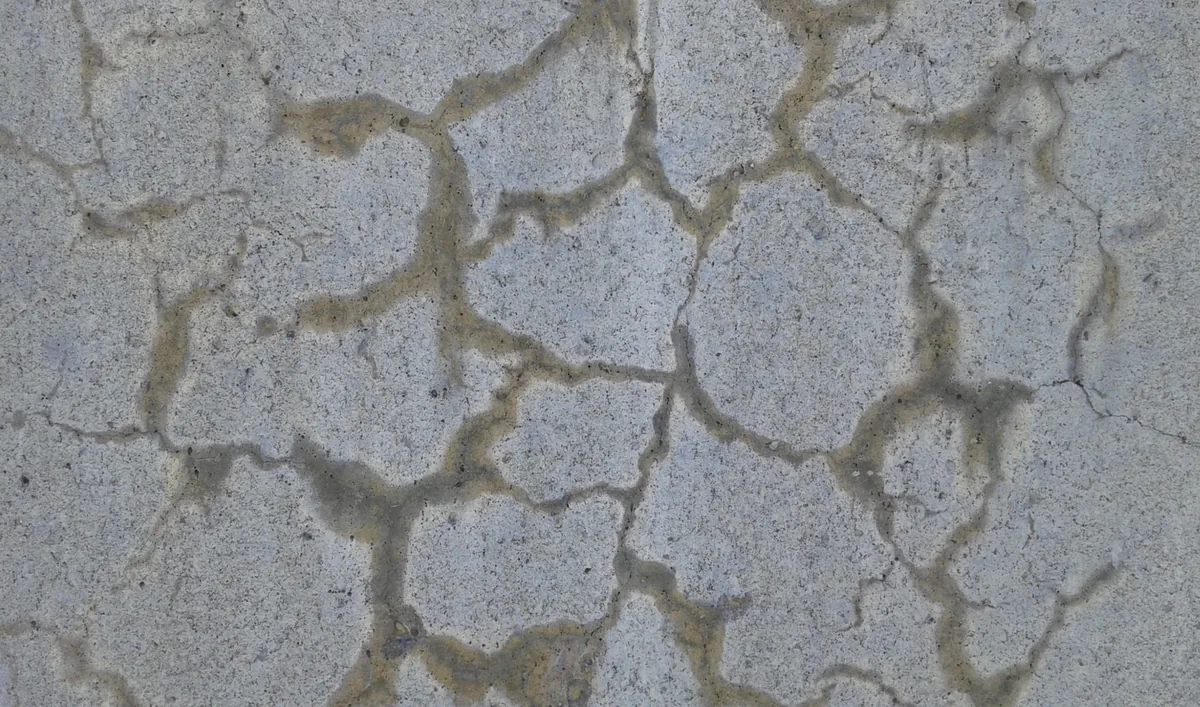
„Rak betonu”, czyli ASR (Alkali-Silica Reaction), to reakcja zachodząca pomiędzy reaktywną krzemionką w niektórych kruszywach a silnie alkaliczną cieczą w porach betonu. Powstający żel chłonie wodę i pęcznieje, co może prowadzić do spękań i stopniowego niszczenia posadzki. Rozwojowi uszkodzeń sprzyja jednoczesna obecność reaktywnego kruszywa, alkaliów i wilgoci.
Wybór chemii do utwardzania betonu ma znaczenie. Tradycyjne preparaty na bazie krzemianu sodu wprowadzają dodatkowy sód, który w betonie podatnym na ASR może sprzyjać tej reakcji. Ich aplikacja bywa również bardziej pracochłonna: wymaga wcierania, płukania i dokładnego usuwania pozostałości. Pozostawiony nadmiar może tworzyć białe osady i plamy. Przykładowo producent preparatu sodowego PS108 zaleca dokładne płukanie właśnie w celu ograniczenia białego nalotu.
Dlatego rośnie popularność utwardzaczy na bazie krzemianu litu. Technologia ta jest stosowana przez amerykańskich producentów i dostępna na rynkach międzynarodowych. Łączy utwardzanie i ograniczenie pylenia z prostszą aplikacją. C² Hard i C² Super Hard nie wymagają szorowania ani płukania podczas prawidłowo wykonanej aplikacji, a producent deklaruje, że nie inicjują ani nie wspomagają powierzchniowej reakcji ASR.
W naszej ofercie znajdziesz preparaty litowe C² Eco Hard, C² Hard i C² Super Hard, a także Ultra Slab Plus — hybrydową mieszankę krzemianów litu i potasu, opracowaną do posadzek zacieranych mechanicznie i polerowanych. Dobieramy produkt do chłonności, stanu i sposobu wykończenia betonu, aby uzyskać trwałe utwardzenie oraz ułatwić wykonanie prac. Zapytaj nas, który preparat C² będzie odpowiedni do Twojej posadzki.
Products in the shop
- Czym jest certyfikat NSF i po co się go stosuje?Show answer
NSF to niezależna organizacja, która sprawdza produkty pod kątem bezpieczeństwa i higieny. Certyfikat NSF oznacza, że dany produkt został przebadany i spełnia wymagania określonej normy. W zależności od certyfikatu sprawdzane mogą być także materiały i miejsce produkcji.
Warto pamiętać, że certyfikaty NSF dotyczą konkretnych produktów i wymagań. Dlatego najlepiej sprawdzić, czego dokładnie dotyczy certyfikat danego produktu.

Products in the shop
- Which concrete hardener is the cheapest?Show answer
It depends on the floor. The lowest price per litre does not always mean the lowest cost per square metre. What counts is the composition of the whole product: the content of silicates and other compounds that affect penetration, the course of the reaction and the depth of action in the concrete. The individual components are chosen so that the product works appropriately for the type and absorbency of the surface. In the case of heavily damaged concrete, a cheaper product may require greater consumption and still not deliver the expected result.
An economical solution is C² ECO HARD, a lithium silicate based hardener. A popular choice is also C² Hard Blend, a hybrid product combining lithium silicate with a small amount of potassium silicate. Contractors often use it on large areas when they want a good result at a reasonable cost. With correct selection and application, it helps achieve an even finish without streaks and efflorescence, and a good gloss.
If you describe the condition of the floor and the planned scope of work, we will help you choose a product and estimate consumption and cost per square metre.
Products in the shop
Need a product recommendation for your own problem? Knowledge base (after registration and B2B sign-in).