Hardeners & densifiers
C² Super Hard™
Topowy utwardzacz litowy ratuje bardzo słabe, pylące betony i zapewnia maksymalny połysk posadzek polerowanych.
SKU PROD 000083 · 1 l
Pack size
In stock
Unit: op.
Need help? Ask our advisors
Calculate how much you need
Concrete condition / substrate
First coat
You can adjust coverage after a site trial. Starting values come from the product card.
- An existing floor that sheds dust needs surface strengthening before further use or polishing. C² Super Hard™ works within the concrete, increasing the hardness of its surface layer.
- The lithium silicate treatment penetrates the substrate and forms insoluble calcium silicate compounds in its pores. This reduces dusting and improves surface abrasion resistance.
- It is suited to refurbishing existing concrete and finishing floors where a pronounced gloss is required. Straightforward application and easier polishing help streamline the project, while the dense surface simplifies subsequent cleaning. The product strengthens the surface layer; it does not replace structural repairs.
Instrukcja stosowania C² Super Hard™
1. Przygotowanie podłoża Podłoże musi być suche i czyste. Usuń kurz, oleje, zabrudzenia oraz powłoki blokujące wnikanie. Przed pracą sprawdź chłonność betonu, delikatnie spryskując go wodą – powinna wsiąkać równomiernie.Krytyczne: Nie nakładaj produktu na brudny lub zamarznięty beton ani w miejscach z zastoinami wody.
2. Ochrona otoczenia Zabezpiecz elementy wrażliwe (szkło, aluminium, powierzchnie polerowane). Aplikację przeprowadzaj w temperaturze 4–28°C.
3. Próba technologiczna Zanim zaczniesz, wykonaj test na małym fragmencie docelowym sprzętem. Wydajność podana w karcie jest orientacyjna – próba pozwoli Ci ustalić rzeczywiste zużycie.
4. Aplikacja Produkt jest gotowy do użycia nie rozcieńczaj go. Nałóż jedną warstwę opryskiwaczem niskociśnieniowym z dyszą wachlarzową. Następnie równomiernie rozprowadź preparat mopem z mikrofibry (bez szorowania), usuwając miejscowe nadmiary.
5. Utrzymanie wilgoci (5–10 minut) Obserwuj beton. Powierzchnia musi pozostać mokra przez 5 do 10 minut. Jeśli preparat natychmiast wsiąka, zaaplikuj go więcej w suchych miejscach.Krytyczne: Nie dopuszczaj do wyschnięcia preparatu w trakcie tego procesu i nie pozostawiaj kałuż.
6. Wysychanie i czyszczenie Pozostaw powierzchnię do swobodnego wyschnięcia. Jeśli po wyschnięciu pojawi się biały,proszkowy osad, usuń go maszyną czyszczącą lub miotłą. Narzędzia umyj wodą od razu po pracy.
7. Ochrona przed plamami i polerowanie Teraz możesz kontynuować polerowanie zgodnie z zaplanowaną technologią.Pamiętaj, że utwardzenie nie chroni przed plamami – jeśli potrzebujesz takiej ochrony, zastosuj dodatkowy impregnat (np.C² Seal, C² Ultra Matte).
WAŻNE: Aplikacja na świeży beton Nie stosuj C² Super Hard na nowo wylanych posadzkach – świeży, zwarty beton nie wymaga tak wysokiego stężenia krzemianów. Do utwardzania nowych płyt wybierz standardowy C² Hard
Wersja Super Hard jest przeznaczona specjalnie do ratowania posadzek starych, słabych, pylących oraz do systemów polerowanych na wysoki połysk.
Download the full print instruction (PDF)
Application guide C² Super Hard™
Dlaczego warto kupić u nas
Kupujesz produkt i korzystasz z ponad 30 lat naszego doświadczenia w posadzkach.
Pomagamy dobrać rozwiązanie do Twojego betonu, oczekiwanego efektu i budżetu.
Podpowiadamy, jak przygotować powierzchnię, zastosować preparat i uniknąć błędów, które kosztują czas i pieniądze.
Doradzamy na podstawie praktyki
Od ponad 30 lat wykonujemy i odnawiamy posadzki.
Znamy je z budów, prób i wieloletniego użytkowania.
Tą wiedzą dzielimy się z Tobą niezależnie od tego, czy zabezpieczasz garaż, odnawiasz halę, czy zawodowo wykonujesz posadzki.
Dobieramy kompletne rozwiązanie
Utwardzanie, ograniczanie pylenia, impregnacja, ochrona przed plamami, barwienie, doczyszczanie i codzienna pielęgnacja
Nasza szeroka oferta pozwala rozwiązać wiele różnych problemów z betonem. Dobieramy chemię, narzędzia i sposób pracy tak, aby tworzyły spójną technologię.
Oferujemy produkty sprawdzone przez lata
Jesteśmy wyłącznym, certyfikowanym dystrybutorem Crete Colors International w Polsce.
Produkty C² stosowane są w ponad 40 krajach, a marka ma ponad 25 lat doświadczenia.
Sami testowaliśmy te preparaty od kilkunastu lat i obserwujemy ich działanie na wielu realizacjach, na setkach tysięcy m2.
Jasno mówimy, czego możesz oczekiwać
Opieramy się na dokumentacji technicznej, dostępnych badaniach i własnych doświadczeniach.
Wyjaśniamy, od czego zależą wydajność i efekt.
Jeśli podłoże wymaga próby, dodatkowego przygotowania lub innej technologii, powiemy Ci o tym przed zakupem.
Możesz liczyć na pomoc przy aplikacji
Podpowiemy, czym nałożyć produkt, jakie narzędzia wybrać i jak później dbać o posadzkę.
Gdy pojawią się pytania podczas pracy, możesz się z nami skontaktować.
Opowiedz nam o swojej posadzce.
Dobierzemy produkty i sposób wykonania, które mają uzasadnienie w Twojej sytuacji.
Wysyłka produktów chemicznych realizujemy po potwierdzeniu zamówienia. Termin dostawy i warunki transportu ustalamy indywidualnie dla klienta B2B.
Zwroty i reklamacje produktów B2B realizujemy zgodnie z regulaminem sklepu. Skontaktuj się z doradcą Decokoncept, aby zgłosić sprawę.
FAQ
Questions about this product
Answers matched to this product and its pack sizes.
- How does hardening concrete with lithium silicate differ from sodium silicate?Show answer
Both technologies harden concrete, but C² lithium silicates work faster, penetrate the concrete structure effectively and reduce the risk of white deposits.
The main differences according to the Crete Colors comparison:
Greater abrasion resistance: in tests presented by the manufacturer, lithium silicate achieved an improvement of over 60%, while sodium and potassium products achieved about 30%.
Faster effect: the manufacturer states that lithium hardening develops its properties within 7-14 days, whereas traditional sodium products may need significantly longer.
Deeper penetration: lithium technology makes it easier for the product to penetrate the concrete structure and densify it evenly.
Fewer application problems: a lower risk of white efflorescence and deposits, and less need for additional washing of the surface.
Why does it work? Lithium silicate reacts with the calcium hydroxide present in concrete, forming additional C-S-H compounds that densify and strengthen its structure. The result is greater abrasion resistance and effective reduction of dusting.
Which lithium hardeners does Decokoncept offer?
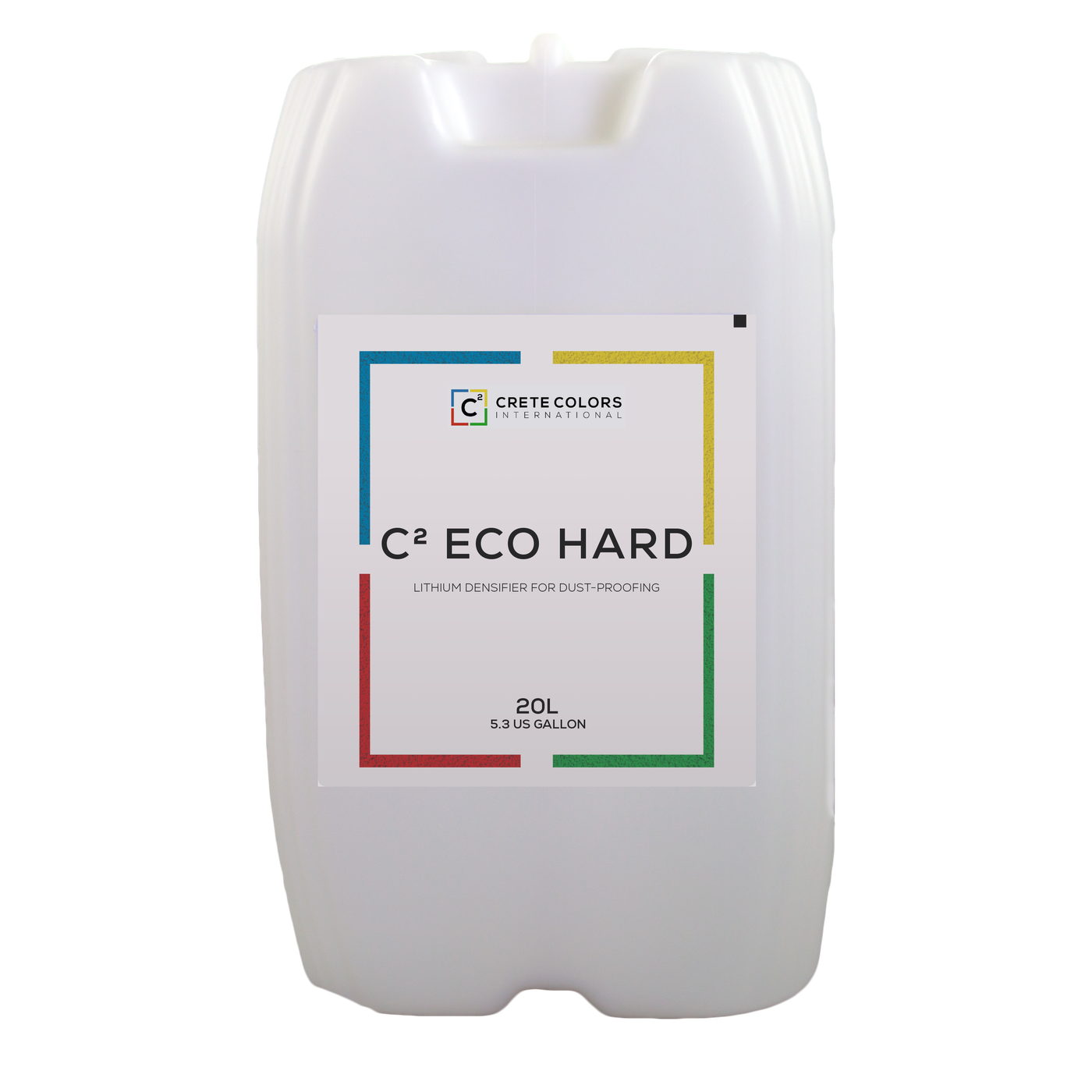
C² ECO HARD: for economical hardening and dust reduction of concrete.
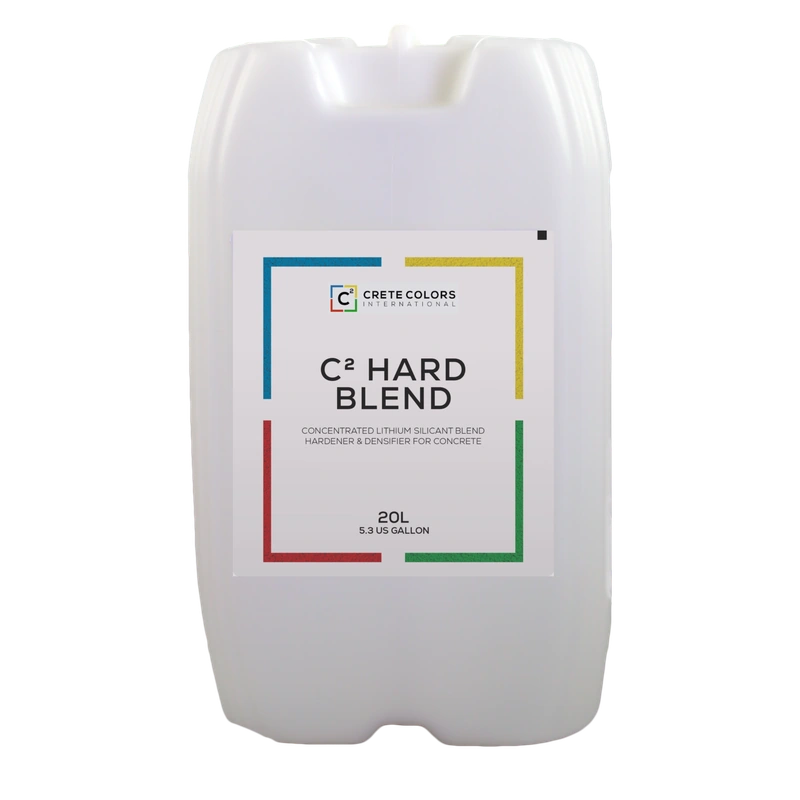
C² Hard Blend: for densifying and improving the properties of concrete surfaces.
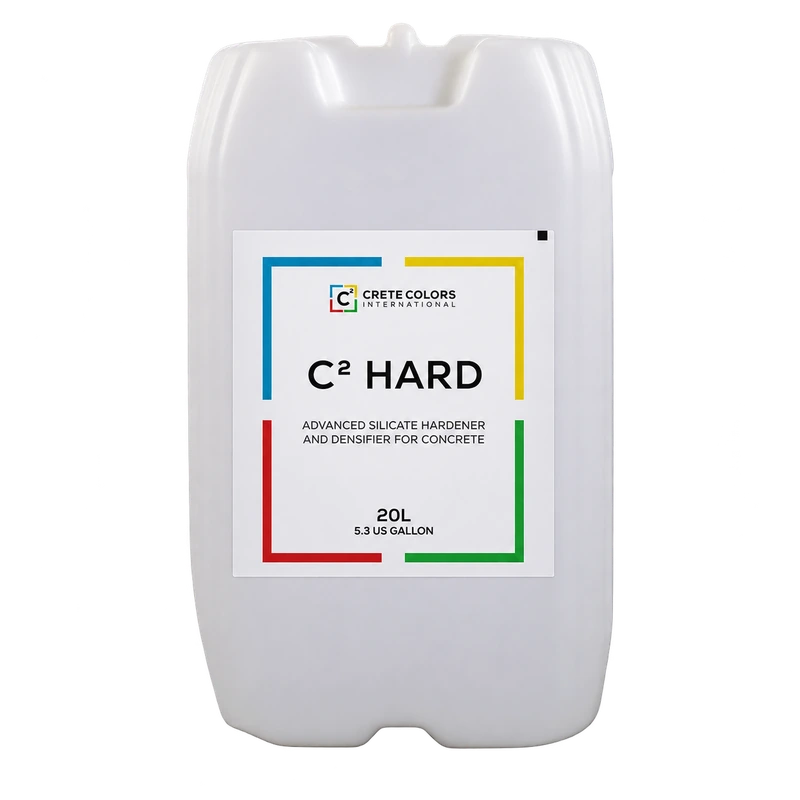
C² Hard: our most popular lithium silicate based hardener, for new and existing floors.
C² Super Hard: a premium product for particularly demanding surfaces, including weak, porous and heavily dusting concrete.
What do you gain? A more durable floor, less dusting, greater abrasion resistance and lower maintenance costs.
Contact Decokoncept. We will choose the right hardener for the quality of your concrete, so you do not overpay for a product you do not need.
- How can dusting, crumbling, previously poured or poorly cured concrete be strengthened?Show answer
Dusting and weakened concrete can be effectively strengthened! For this we recommend two products: C² Hard and the even stronger C² Super Hard, designed for more demanding surfaces.
The products penetrate the concrete structure, harden it, increase abrasion resistance and reduce dusting.
One day is enough for application, and the first strengthening effects are visible as early as the next day!
It is a way to improve the durability of an existing floor without having to replace it, provided the substrate is suitable for repair.
- What should I do when a concrete floor dusts?Show answer
Dusting of a concrete floor often results from a weakened, porous surface layer and the lack of adequate chemical hardening of the concrete.
The solution is to use a silicate based hardener, preferably lithium. The product penetrates the concrete structure and reacts with the calcium hydroxide present in it, forming additional binding compounds C-S-H (calcium silicate hydrate). This reaction densifies and strengthens the near-surface layer, increases its abrasion resistance and effectively reduces dusting.
At Decokoncept we offer the full range of Crete Colors hardeners:
C² Hard: our most popular lithium silicate based hardener, intended for effective hardening and densifying of concrete floors.
C² Super Hard: our strongest product for particularly demanding cases, when the concrete is very weak, porous and dusts heavily. It delivers significantly better surface properties even on difficult substrates.
A correctly selected and applied hardening system can provide protection against dusting for many years, even up to 20 years under suitable operating conditions. Giving such a warranty, however, requires an assessment of the condition of the concrete and agreement on the conditions of use.
Is your floor dusting? Contact Decokoncept. We will help assess the problem and choose the most effective product to permanently reduce dusting without replacing the floor.
- Co to jest „rak betonu” (ASR) i dlaczego warto wybrać utwardzacz na bazie litu zamiast sodu?Show answer
„Rak betonu”, czyli ASR (Alkali-Silica Reaction), to reakcja zachodząca pomiędzy reaktywną krzemionką w niektórych kruszywach a silnie alkaliczną cieczą w porach betonu. Powstający żel chłonie wodę i pęcznieje, co może prowadzić do spękań i stopniowego niszczenia posadzki. Rozwojowi uszkodzeń sprzyja jednoczesna obecność reaktywnego kruszywa, alkaliów i wilgoci.
Wybór chemii do utwardzania betonu ma znaczenie. Tradycyjne preparaty na bazie krzemianu sodu wprowadzają dodatkowy sód, który w betonie podatnym na ASR może sprzyjać tej reakcji. Ich aplikacja bywa również bardziej pracochłonna: wymaga wcierania, płukania i dokładnego usuwania pozostałości. Pozostawiony nadmiar może tworzyć białe osady i plamy. Przykładowo producent preparatu sodowego PS108 zaleca dokładne płukanie właśnie w celu ograniczenia białego nalotu.
Dlatego rośnie popularność utwardzaczy na bazie krzemianu litu. Technologia ta jest stosowana przez amerykańskich producentów i dostępna na rynkach międzynarodowych. Łączy utwardzanie i ograniczenie pylenia z prostszą aplikacją. C² Hard i C² Super Hard nie wymagają szorowania ani płukania podczas prawidłowo wykonanej aplikacji, a producent deklaruje, że nie inicjują ani nie wspomagają powierzchniowej reakcji ASR.
W naszej ofercie znajdziesz preparaty litowe C² Eco Hard, C² Hard i C² Super Hard, a także Ultra Slab Plus — hybrydową mieszankę krzemianów litu i potasu, opracowaną do posadzek zacieranych mechanicznie i polerowanych. Dobieramy produkt do chłonności, stanu i sposobu wykończenia betonu, aby uzyskać trwałe utwardzenie oraz ułatwić wykonanie prac. Zapytaj nas, który preparat C² będzie odpowiedni do Twojej posadzki.
- Czym jest certyfikat NSF i po co się go stosuje?Show answer
NSF to niezależna organizacja, która sprawdza produkty pod kątem bezpieczeństwa i higieny. Certyfikat NSF oznacza, że dany produkt został przebadany i spełnia wymagania określonej normy. W zależności od certyfikatu sprawdzane mogą być także materiały i miejsce produkcji.
Warto pamiętać, że certyfikaty NSF dotyczą konkretnych produktów i wymagań. Dlatego najlepiej sprawdzić, czego dokładnie dotyczy certyfikat danego produktu.
- Which concrete hardener is the cheapest?Show answer
It depends on the floor. The lowest price per litre does not always mean the lowest cost per square metre. What counts is the composition of the whole product: the content of silicates and other compounds that affect penetration, the course of the reaction and the depth of action in the concrete. The individual components are chosen so that the product works appropriately for the type and absorbency of the surface. In the case of heavily damaged concrete, a cheaper product may require greater consumption and still not deliver the expected result.
An economical solution is C² ECO HARD, a lithium silicate based hardener. A popular choice is also C² Hard Blend, a hybrid product combining lithium silicate with a small amount of potassium silicate. Contractors often use it on large areas when they want a good result at a reasonable cost. With correct selection and application, it helps achieve an even finish without streaks and efflorescence, and a good gloss.
If you describe the condition of the floor and the planned scope of work, we will help you choose a product and estimate consumption and cost per square metre.
Catalog
See also
Similar products and alternative solutions.