
Logistics hall with heavy forklift traffic: from a dusting floor to polished concrete
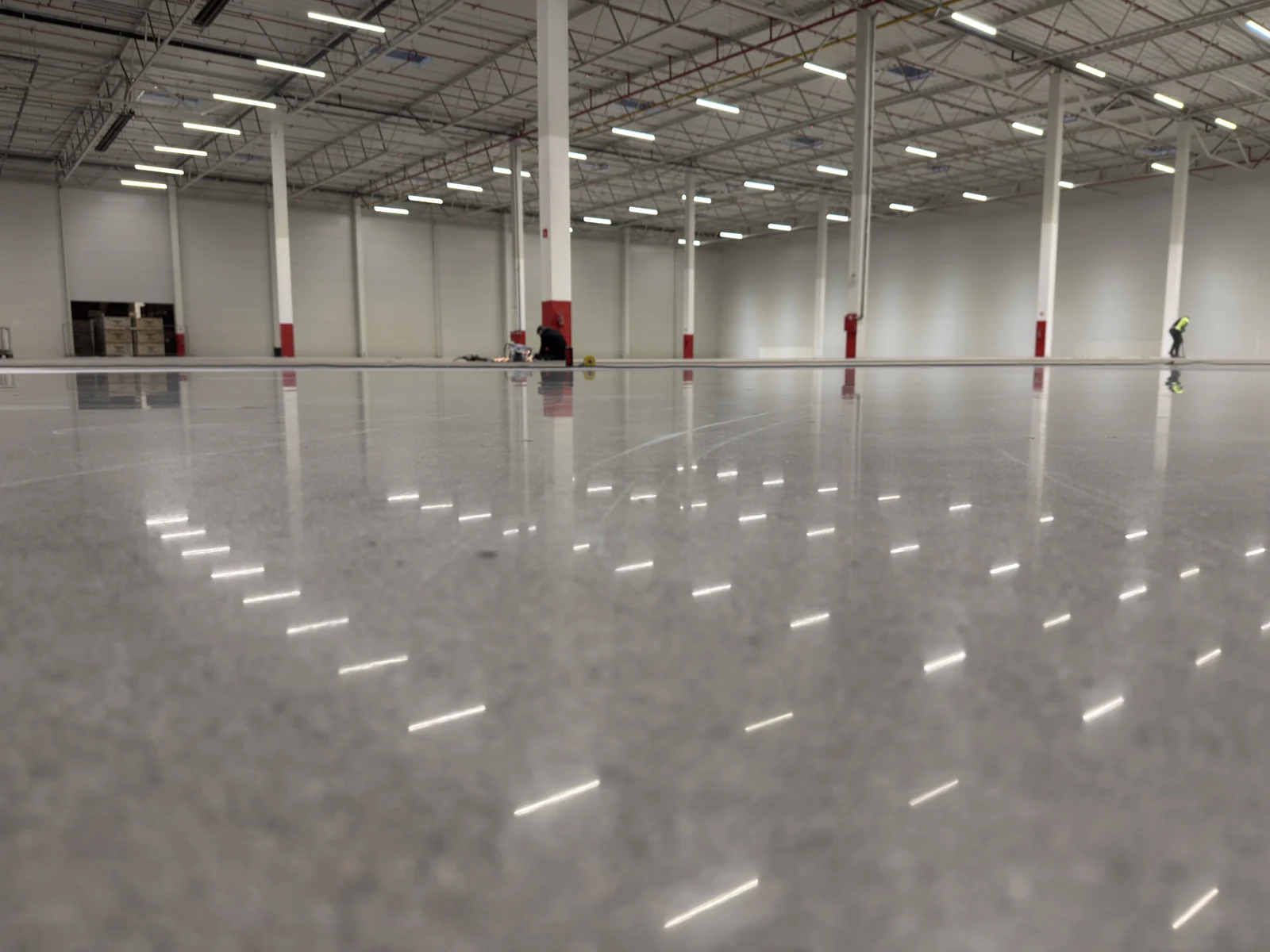
LOGISTICS HALL · TRAFFIC ROUTES AND DOCK AREAS · GRINDING, LITHIUM HARDENING AND POLISHING
After several years of heavy forklift traffic, the acrylic coating wore through on the main travel routes and at the docks. The exposed concrete began to abrade and dust, and black tyre marks became fixed in the remaining coating. The renovation was planned to limit the time areas were closed to traffic. The scope of work included removing the acrylic and the weakened layer of concrete, hardening the surface with C² Hard™, diamond polishing and sealing with C² Seal™.
Case study structure
01
Problem
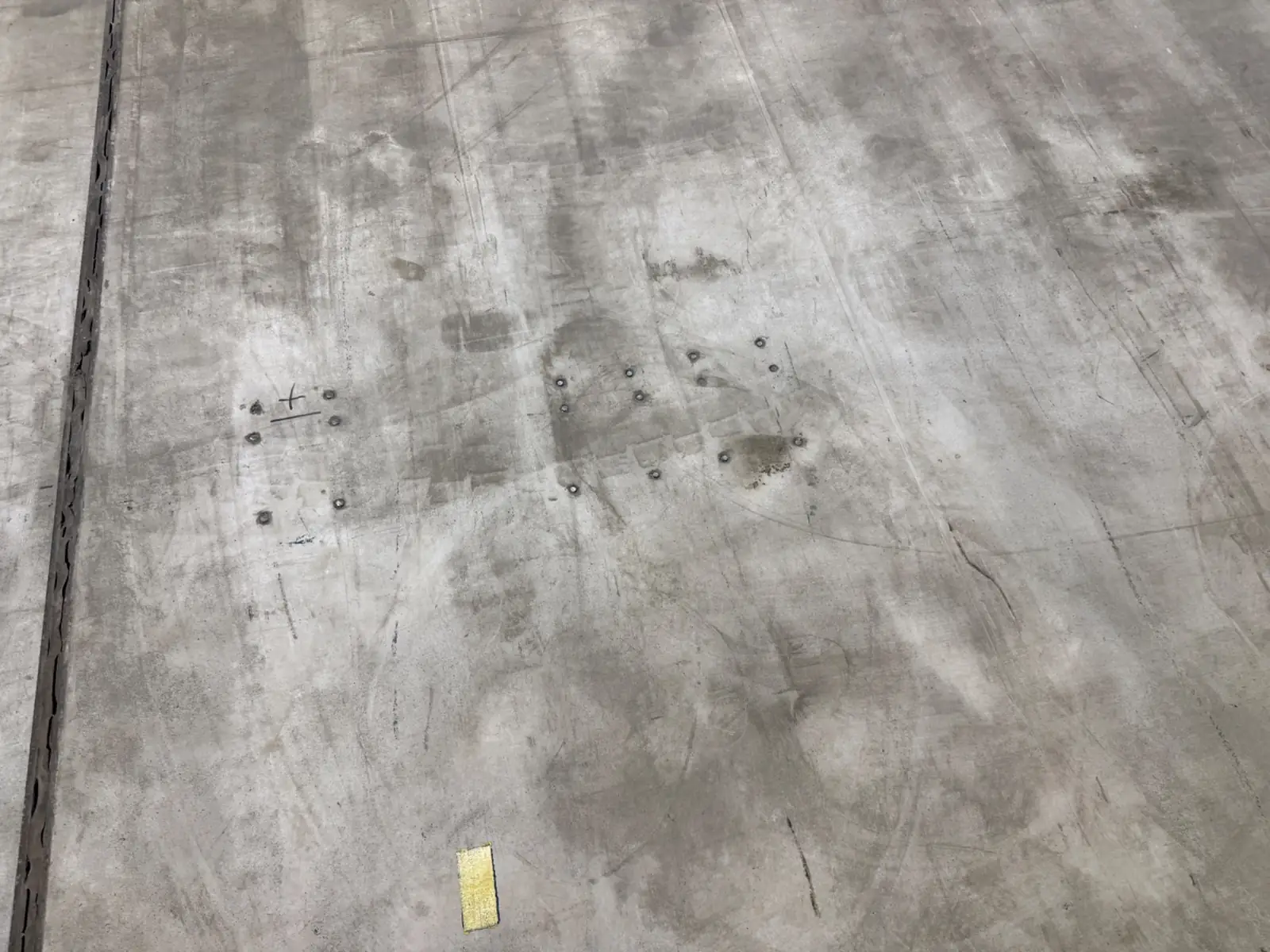
The floor was made of smooth-troweled concrete protected with an acrylic coating. At first the surface looked good. Over time, dark rubber marks became fixed in the acrylic, especially where forklifts regularly turned, braked or started off.
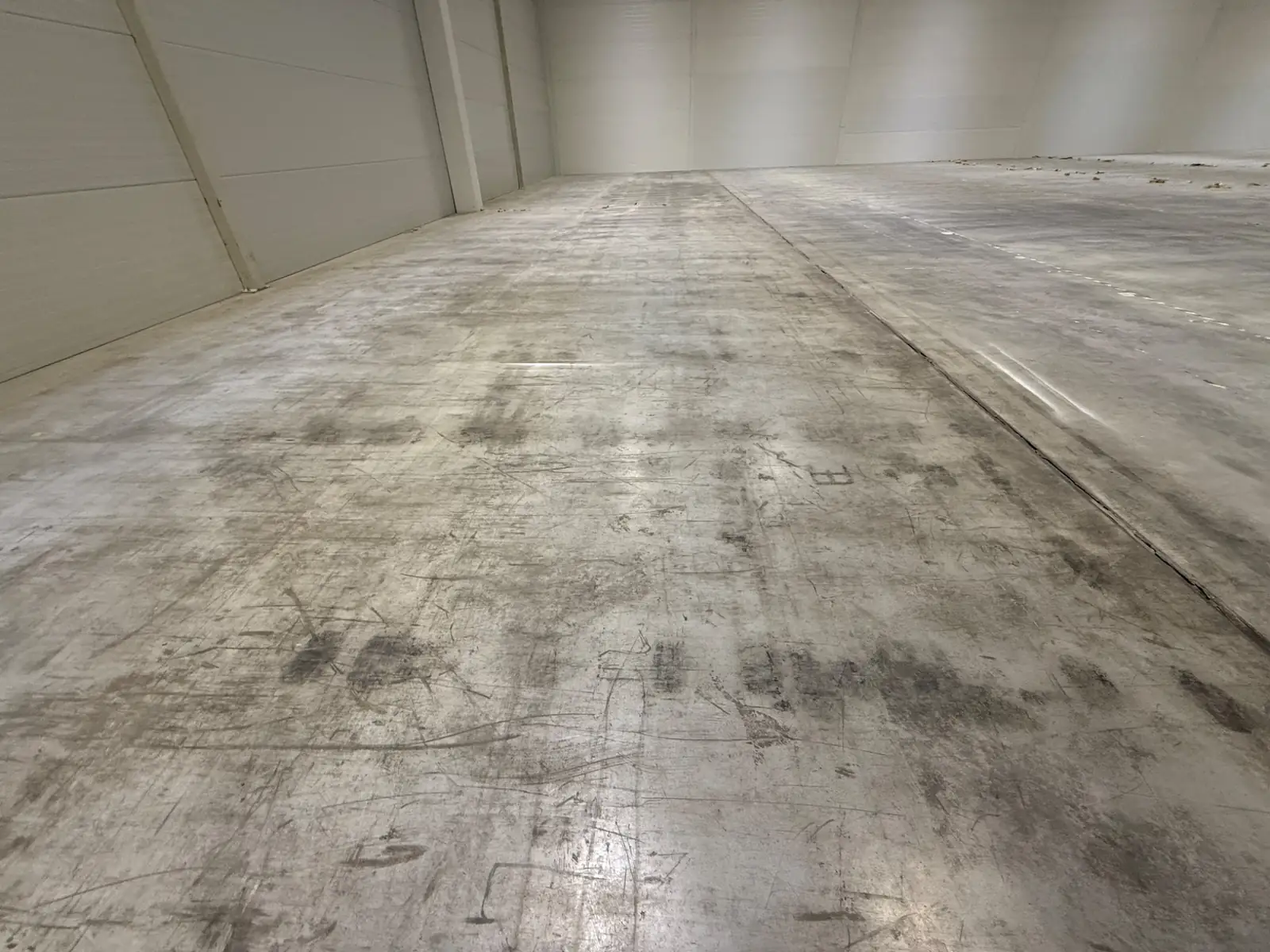
After several years, in the traffic routes and at the docks, the acrylic had worn through to the concrete in places. The exposed concrete, which had not previously been chemically hardened, began to abrade and dust. As a result, one hall had two problems. Where the acrylic remained, black tyre marks spoiled it. Where it had worn away, the condition of the concrete itself was deteriorating.
02
Consequences
Dust from the floor settled on goods, racking and equipment. Washing the hall took more time, and rubber marks fixed in the acrylic remained visible after ordinary cleaning. Rough, worn areas also increased forklift tyre wear. The problem was most visible at the docks and on the routes on which smooth goods flow depends.
03
Solution
Renovation using polished concrete technology was chosen. Grinding removed both the remains of the soiled acrylic and the weakened layer of concrete where it had worn. Once sound substrate was reached, the concrete was chemically hardened with C² Hard™ and then polished with diamond tools. Finally, the C² Seal™ sealer was applied, which increases protection against stains and makes routine washing easier.
04
Application step by step
1. Grinding. Planetary machines with diamond tools removed the acrylic together with the rubber marks. Where the concrete had begun to abrade and dust, the weakened layer was ground down to a compact substrate.
2. Chemical hardening. C² Hard™ was applied to the prepared surface. The lithium silicate based product penetrates the concrete and strengthens its top layer.
3. Diamond polishing. Successive passes with a planetary machine using progressively finer diamond tools smoothed the surface and gave it gloss. A smoother floor is easier to wash.
4. Sealing. C² Seal™ was applied to the polished concrete to limit the penetration of dirt and make it easier to remove during washing.
Daily care. C² Maintenance™ was specified for regular washing. The product contains lithium silicate, which helps maintain the surface and its gloss during routine use.
05
Results, before and after
Before the renovation, black forklift tyre marks were fixed in the acrylic coating. At the docks and on the main travel routes the acrylic had worn through to the concrete in places. The exposed surface gradually abraded, and the resulting dust settled on goods and equipment. The traffic routes were dull and unevenly worn.
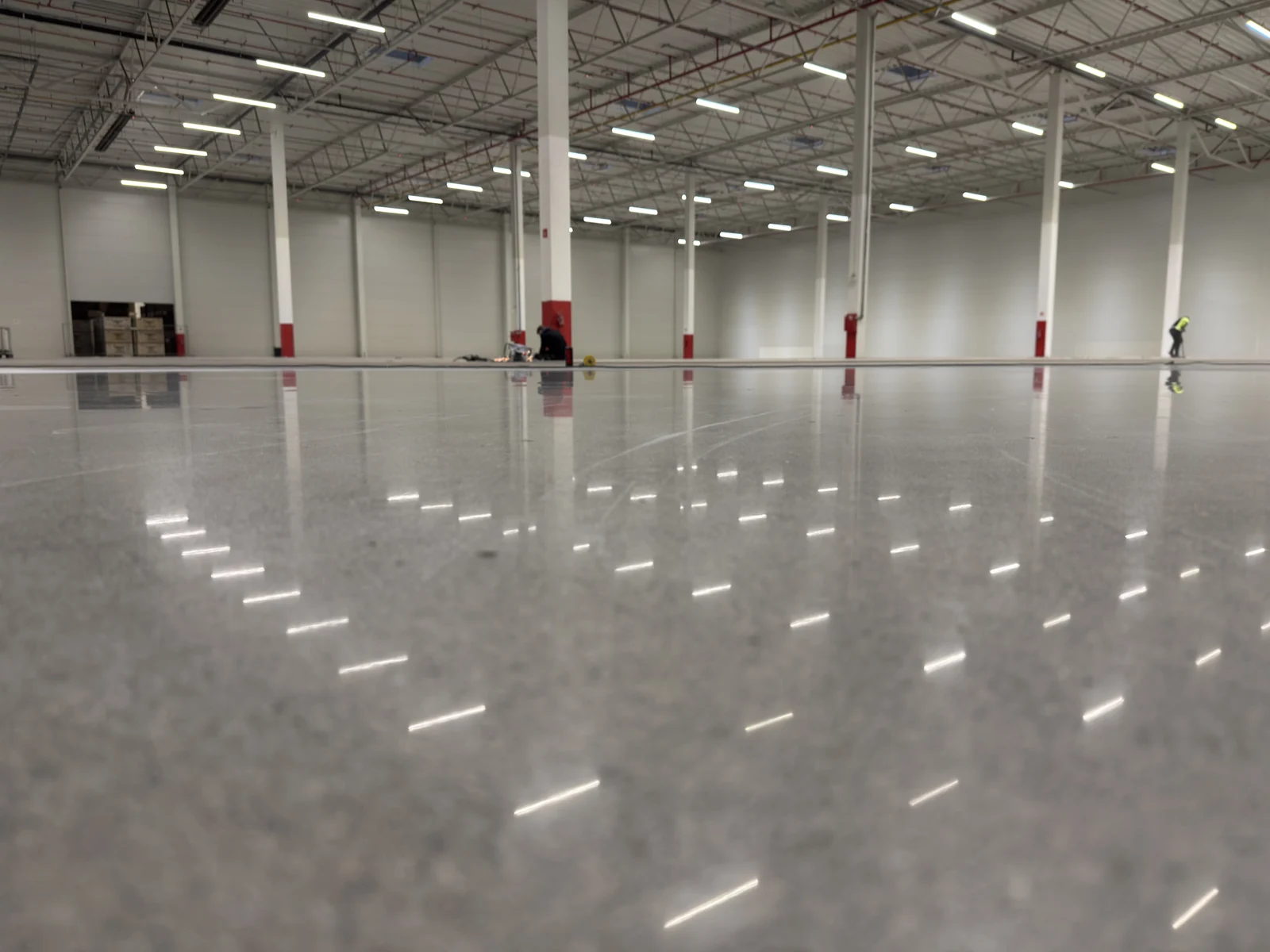
After the renovation, the old acrylic coating and the tyre marks fixed in it were removed by grinding. The hardened and polished concrete is smoother, less prone to abrasion and easier to wash. Reduced dusting from the floor makes it easier to keep goods and equipment clean. The polished surface reflects light better, so the hall looks brighter and tidier.
06
Financial benefits
A reduced risk of corrections and downtime per m² compared with a typical dusting complaint. The system cost is calculated from the pack coverage, to be confirmed in a quotation for the site. A smoother, less dusty floor reduces the labour needed to wash the hall and clean dust off equipment. Removing the rough, degraded layer of concrete can also reduce forklift tyre wear. Phasing the work makes it possible to plan closures of individual zones around delivery hours and dock traffic.
Polished concrete reflects light better. Any savings on lighting depend on whether, after measuring light levels, the power of fittings can be reduced or their operating time shortened. Floor maintenance costs are easiest to assess by comparing washing time and tyre replacement spending before and after the renovation.
07
Conclusions and recommendation
If the acrylic is black in places from tyre marks, and in the most heavily loaded zones it has worn through to dusting concrete, it is worth starting with a grinding trial at a dock or on a traffic route. The trial shows how deep the weakened layer extends and what result can be achieved after hardening and polishing.
When sound concrete lies beneath the weakened layer, the existing floor can be reused and the renovation carried out zone by zone. After the work is finished, regular washing with C² Maintenance™ helps keep the surface clean and glossy in daily use.